
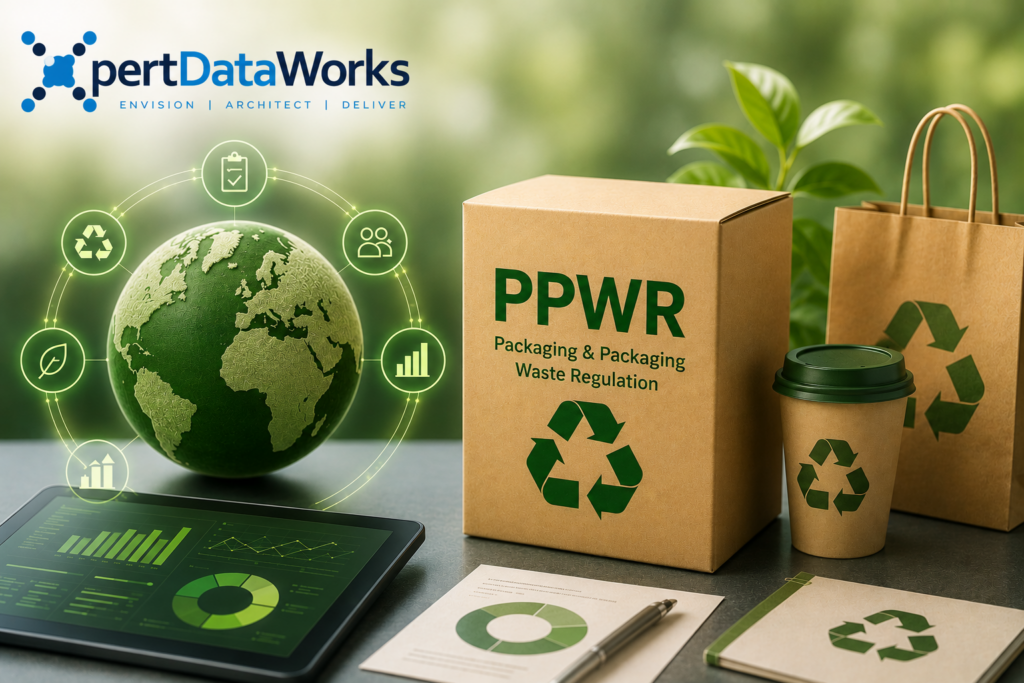
A strategic guide for manufacturers navigating the shift from manual compliance to data-driven governance.
The European Union’s Packaging and Packaging Waste Regulation (PPWR) is transforming the regulatory landscape for manufacturers operating within or exporting to the EU market. For years, environmental compliance was often treated as an annual reporting exercise—a chaotic end-of-quarter scramble involving frantic emails, static PDFs, and sprawling spreadsheets.
Those days are officially over.
PPWR isn’t just another regulatory box to check; it is a fundamental shift in how businesses must manage product and packaging data. Designed to drastically reduce packaging waste, promote reuse, and enforce strict recycled content mandates, PPWR sets a new standard for accountability. To meet these ambitious goals, manufacturers can no longer rely on fragmented manual tracking. Achieving compliance requires an accurate, centralized product data foundation, end-to-end supply chain transparency, and real-time traceability.
Here is a look at why PPWR is a wake-up call for manufacturing data governance—and how businesses can turn a compliance burden into a long-term competitive advantage.
The Silent Risk of Managing Compliance via Spreadsheets
For decades, the humble spreadsheet has been the default operating system for product specifications. While convenient for small-scale tracking, spreadsheets quickly become liability risks under modern regulatory frameworks like PPWR.
Packaging data is complex and inherently dynamic. A single finished product might feature multiple packaging layers—primary, secondary, and tertiary—each composed of different materials, coatings, adhesives, and recycled content ratios. When this information is scattered across localized files, shared drives, and static supplier specification sheets, critical problems inevitably arise:
- Version Control Nightmare: Different teams end up working from outdated spec sheets, leading to inaccurate reporting.
- Lack of Real-Time Visibility: Manual updates cannot keep pace with sudden supply chain adjustments or material reformulations.
- Audit Vulnerability: When regulatory bodies demand proof of recycled content percentages or substance restrictions, piecing together an audit trail from disconnected spreadsheets takes weeks, if not months.
In the era of PPWR, relying on spreadsheets is no longer just inefficient—it is a direct financial and operational risk.
The Core Data Pillars of PPWR Compliance
To navigate PPWR successfully, organizations must pivot from reactive documentation to proactive data management. Compliance boils down to three essential capabilities:
- Accurate, Granular Product Data
You cannot manage what you cannot measure. PPWR demands precise data on every packaging component—down to exact material composition, total weight, recyclability performance grades, and empty space ratios. Establishing a single source of truth for product and packaging attributes ensures that every department works with verified, up-to-date information.
- Deep Supplier Transparency
Packaging compliance does not happen in a vacuum. Manufacturers depend entirely on upstream suppliers for accurate material declarations, certificates of origin, and recycled content verification. Building automated workflows to capture, validate, and update supplier data ensures seamless collaboration across your vendor ecosystem.
- End-to-End Traceability
From raw material sourcing to final distribution, PPWR requires a verifiable trail. Immutable data structures allow companies to track materials through every stage of the lifecycle, laying the groundwork for digital product passports and seamless reporting.
Turning Compliance into a Strategic Advantage
It is easy to view PPWR strictly as a legal hurdle, but forward-thinking manufacturers see it as an opportunity for operational transformation.
By taking control of your packaging data today, your organization can achieve significant strategic benefits:
- Enhanced Operational Efficiency: Eliminating manual data gathering frees up sustainability, procurement, and R&D teams to focus on innovation rather than administrative firefights.
- Accelerated Circularity: Having complete visibility into your material mix makes it vastly easier to identify over-packaging, evaluate alternative materials, and design for circularity from day one.
- Stronger Customer Trust: Modern consumers, enterprise buyers, and investors demand verified sustainability claims. A transparent data ecosystem ensures your claims are backed by solid evidence, protecting your brand from greenwashing accusations.
Is Your Packaging Data Ready for the Future? The transition to a fully circular economy is accelerating, and regulatory standards will only continue to tighten globally. Waiting for enforcement deadlines to force your hand leaves your operations exposed to supply chain delays, reputational damage, and heavy fines. At Xpert Data Works, we specialize in helping manufacturers build trusted, scalable data foundations. By unifying product attributes, streamlining supplier collaboration, and automating data governance, we simplify PPWR compliance while unlocking new operational efficiencies across your supply chain. |
The future of packaging is transparent, traceable, and data-driven. Is your data infrastructure ready to lead the way?
Ready to transform your packaging data strategy? Connect with the team at Xpert Data Works to learn how we can help you streamline compliance and drive sustainable growth.