
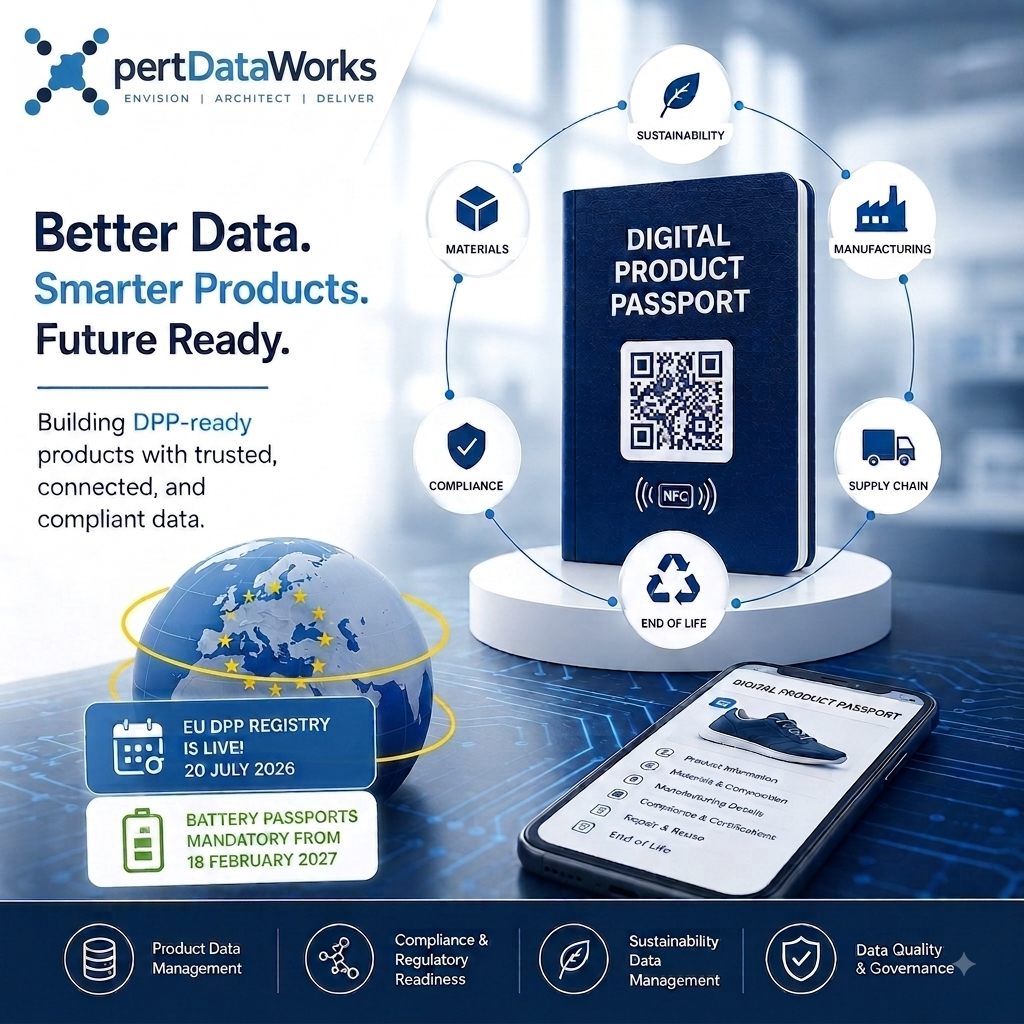
Turning Lifecycle Data into a Competitive Advantage for Modern Manufacturers
The global manufacturing landscape is undergoing a monumental shift driven by regulatory evolution and consumer demand for radical transparency. At the center of this transformation is the Digital Product Passport (DPP). Mandated by the European Union’s Ecodesign for Sustainable Products Regulation (ESPR) and rapidly gaining traction across global markets, DPPs require detailed digital records detailing a product’s origin, material composition, carbon footprint, repairability, and circular end-of-life options.
However, forward-thinking enterprise manufacturers are discovering a vital truth: treating the Digital Product Passport strictly as a regulatory burden misses the bigger picture. When planned and executed with precision, DPPs convert raw product data into a highly strategic enterprise asset.
The Hidden Bottleneck: Fragmented Lifecycle Data
For most industrial manufacturers, the primary challenge in DPP implementation is not simply understanding compliance metrics—it is managing the underlying data architecture. Product information is historically trapped in functional silos across the organization:
- Engineering & Design: Product Lifecycle Management (PLM) systems contain critical Bill of Materials (BOM) data but often lack real-time supplier updates or chemical compliance specifics.
- Procurement & Operations: Enterprise Resource Planning (ERP) systems store vendor profiles and transactional histories but rarely capture granular sustainability scores or origin verification.
- Compliance & ESG Teams: Independent audit spreadsheets, Tier-N supplier questionnaires, and carbon accounting tools operate in isolation from everyday product management workflows.
This fragmentation creates severe risk. Incomplete, outdated, or disconnected data leads to audit delays, inaccurate carbon accounting, and potential regulatory penalties. To make Digital Product Passports viable, enterprises must bridge these gaps and establish a unified, single source of truth across the entire product lifecycle.
The Four Pillars of a Robust DPP Strategy
Building a DPP-ready organization requires systematically connecting four core data dimensions across the value chain:
1. Product Master Data Establishing structured, globally standardized identifiers (such as persistent URIs and GTINs) that securely link physical products directly to their digital twins throughout distribution. | 2. Supplier Transparency Integrating deep Tier-N supplier intelligence to validate material provenance, conflict-free sourcing, and chemical substance safety. |
3. Regulatory Compliance Automating alignment with evolving global mandates (such as EU Battery Passports, ESPR, REACH, and RoHS) to eliminate manual audit friction. | 4. Sustainability Metrics Embedding verified Life Cycle Assessments (LCA), recycled material ratios, repairability scores, and end-of-life recycling guidelines directly into the product record. |
Transforming Compliance into Business Value
When product lifecycle data is accurate, unified, and easily accessible, manufacturers unlock significant commercial advantages that extend far beyond meeting legal minimums:
- Accelerated Time-to-Market & Frictionless Audits: Automated data pipelines eliminate tedious manual compliance checks. Products clear customs, regulatory reviews, and retail onboarding much faster when backed by structured, machine-readable digital passports.
- Unlocking Circular Revenue Models: Detailed material and component records enable efficient repair, refurbishment, remanufacturing, and recycling networks. This opens up lucrative secondary market services and recurring revenue streams throughout the product lifecycle.
- Enhanced Brand Value and Customer Trust: B2B procurement teams and modern consumers increasingly demand verifiable sustainability claims. Verifiable, tamper-proof product passports build lasting market trust and protect against greenwashing allegations.
How Xpert Data Works Drives DPP Readiness
Preparing for Digital Product Passports is ultimately a data architecture challenge. At Xpert Data Works, we specialize in helping industrial and manufacturing enterprises organize, govern, and connect their enterprise data streams.
- Breaking down internal data silos across PLM, ERP, MES, and ESG platforms.
- Establishing robust master data management (MDM) and governance frameworks.
- Connecting supplier networks to ensure seamless, automated data collection.
- Ensuring continuous readiness for evolving global regulatory frameworks.
Better Data Today → Compliance-Ready Products Tomorrow
Partner with Xpert Data Works to turn your product data into your strongest competitive advantage. Connect with our team today to fast-track your Digital Product Passport strategy.