
From Spreadsheets to a Single Source of Truth for Product Compliance
Product compliance used to be a periodic exercise: collect a few supplier declarations, file them, and move on until the next audit. That model is breaking down. REACH, RoHS, PFAS restrictions, GPSR and the new PPWR all ask the same question of manufacturers: do you know what is inside every product, who supplied it, and can you prove it?
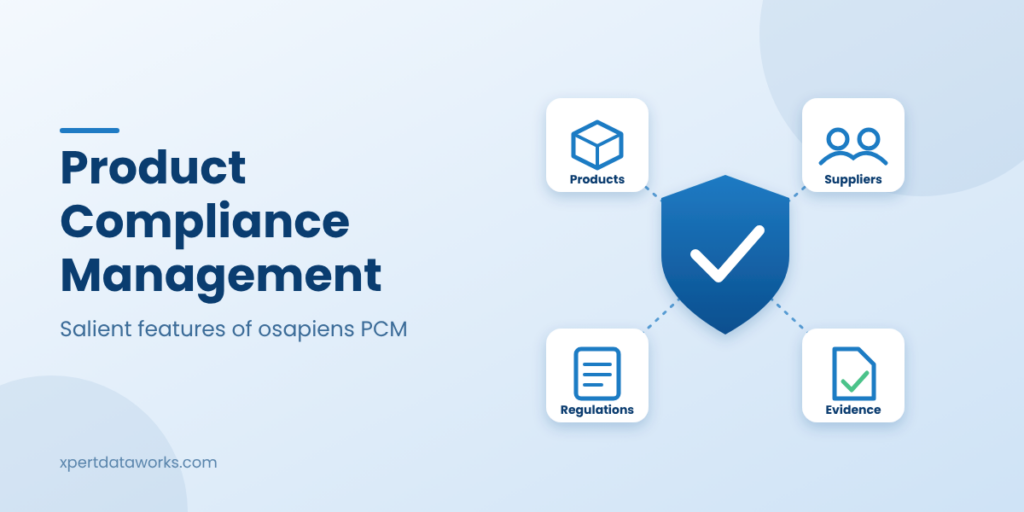
For most companies the honest answer lives in spreadsheets, e-mail threads and disconnected ERP and PLM systems. osapiens Product Compliance Management (PCM) is designed to replace that patchwork with one governed platform that connects product data, suppliers, markets and regulations.
The Data Challenge Behind Product Compliance
Before any compliance decision can be made, teams must answer a set of data questions:
- Which products are affected? Every regulation applies to different products, components and markets.
- What evidence is required? Declarations, certificates and attribute values must be collected for each in-scope product.
- Who holds the information? Much of it sits with suppliers, who must be chased repeatedly.
- Is it current and auditable? Evidence has to be traceable, with a clear history of who submitted what and when.
How osapiens PCM Works
The PCM user manual describes a clear five-step procedure shared between an Administrator and the Product Compliance Manager:
- Integrate master data. Products and business partners come in via Excel, the osapiens SAP connector or a REST API, and are assigned CN codes or product categories.
- Configure rule sets and templates. Ready-made attributes, compliance rule sets, requests and disclosure templates are assigned to products, or custom ones are defined.
- Collect data. Requests go automatically to suppliers through the free osapiens Supplier Portal, and internal requests cover products you make yourself.
- Track compliance. A dashboard and product detail pages show responses, documents and the compliance status assessed against the assigned rule sets.
- Create disclosures. Declarations of conformity and technical documentation are generated, exported as PDF, and can feed databases such as SCIP.
Features That Make the Difference
- Pre-built rule sets: support for regulations such as PPWR, PFAS, REACH, RoHS and GPSR out of the box, with room for custom templates.
- Supplier collaboration: automated outreach, reminders and status tracking, with suppliers responding without seeing your compliance status.
- Automated gap detection: the platform compares collected data against requirements and flags what is missing.
- Audit readiness: a central document library and full change history keep evidence ready for authorities.
- Room to grow: related osapiens modules cover Medical Devices (UDI), Food Traceability and Tobacco Track & Trace, and the manual lists Digital Product Passports as an upcoming capability.
Turning Compliance into Strategic Advantage
When product, supplier and regulatory data live in one place, compliance stops being a recurring fire drill. Teams spend less time chasing documents, find gaps before an auditor does, and can extend the same foundation to new markets and regulations without rebuilding their processes.
The Path Forward
A compliance platform delivers value only when it is connected to clean, trusted data. That is where the work really lies: preparing product master data, integrating ERP and PLM systems, onboarding suppliers and training users.
Is your product data structured to meet the next wave of regulation? Connect with our team to evaluate your data readiness and see how osapiens PCM can fit your compliance roadmap.
Leave a Reply